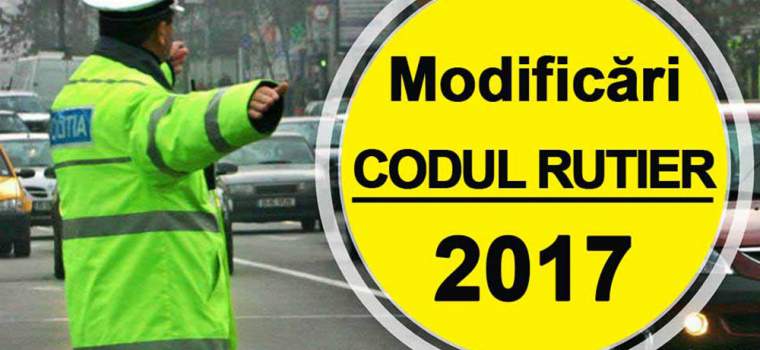
These changes have already been made also in the simplified legislation course from Step 1 of Școala Rutieră.
DECISION for amending and supplementing the Regulation for the implementation of the Government Emergency Ordinance of the Government no. 195/2002 regarding traffic on public roads, approved by the Government Decision no. 1.391/2006
pursuant to art. 108 of the Constitution of Romania, republished,
The Government of Romania adopts this decision.
Art. I. — The Regulation for the implementation of the Government Emergency Ordinance of the Government no. 195/2002 regarding traffic on public roads, approved by the Government Decision no. 1.391/2006, published in the Official Gazette of Romania, Part I, no. 876 of October 26, 2006, with subsequent amendments and supplements, is amended and supplemented as follows:
1. At article 14, letters c), d) and e) are amended and will have the following content:
“c) equipped with a sound warning system; d) equipped, at night or when visibility is reduced, in front, with white or yellow light, and at the back, with red light and with at least one fluorescent-reflective device, visible, of the same colour;
e) equipped with fluorescent-reflective elements or devices, placed on the wheels, which, in motion, form a continuous circle.”
2. At article 96, paragraph (1) is amended and will have the following content:
“Art. 96. — (1) The traffic participants are obliged to notify the administrator of the public road or the nearest traffic police officer when they are aware of the existence on the road of an obstacle or of any other dangerous situation for the flow and safety of traffic.”
3. At article 118, after paragraph (1) a new paragraph is introduced, paragraph (2), with the following content:
“(2) It is recommended that when overtaking a bicycle the lateral distance should be at least 1.5 m.”
4. At article 141, after paragraph (7) a new paragraph is introduced, paragraph (8), with the following content:
“(8) The situation in which any of the wheels of the vehicle or trailer is found on the carriageway is considered waiting on the carriageway.”
5. At article 142, letters k) and n) are amended and will have the following content:
“k) on obligatory lanes for pedestrians or for pedestrians and bicycles or on lanes reserved for certain categories of vehicles, signalled as such;
(...)
n) on the sidewalk, except for the situation in which the administrator of the public road has executed arrangements that comply with the provisions of art. 144 paragraph (2) and (3);”.
6. At article 144, paragraph (2) is amended and will have the following content:
“(2) The administrator of the public road may arrange on certain areas of the sidewalk, with the approval of the traffic police, spaces intended for stopping or waiting of vehicles, marked and signalled accordingly. The arrangements can be executed only if:
a) the corridor intended for the circulation of pedestrians is respected, established according to the regulations in force, which cannot be less than 1 m width;
b) the access of vehicles into the parking is made from the carriageway;
c) the positioning of vehicles in the parking does not hinder the circulation on the first lane or on the arranged lanes.”
7. At article 144, after paragraph (2) a new paragraph is introduced, paragraph (3), with the following content:
“(3) Parking spaces for motor vehicles cannot be arranged on the sidewalk at less than 10 m from intersections, stations of public transport means or pedestrian crossings.”
8. At article 161 paragraph (1), letters h), i), l), p) and r) are amended and will have the following content:
“h) to transport another person, except for the situation provided at paragraph (11) and the situation when the vehicle is built and/or specially equipped for transporting other persons;
i) to circulate on the carriageway in the same direction of travel, if there is a practicable shoulder;
(...)
l) to circulate without fulfilling the obligations provided at art. 14 and 15;
(...)
p) to circulate on lanes other than the one near the curb or shoulder, except for cases in which, before the intersection, they must move into position in compliance with the traffic rules depending on the direction of travel;
r) to circulate within built-up area in which the public lighting does not function, as well as outside built-up area without wearing clothing with fluorescent-reflective elements, from dusk until dawn or when visibility is reduced;”.
9. At article 161, after paragraph (1) a new paragraph is introduced, paragraph (11), with the following content:
“(11) The child aged up to 7 years may be transported on a bicycle by an adult only if the vehicle is provided from construction with a special support or if it has an approved device mounted.”
10. At article 190, paragraph (3) is amended and will have the following content:
“(3) The retention report, the driving licence issued by a foreign authority and the retained documents are sent to the traffic police of the General Inspectorate of the Romanian Police to be sent to the issuing authorities.”
11. At article 196, paragraph (2) is amended and will have the following content:
“(2) If the second act is one of those provided at art. 102 paragraph (3) letters a) and c) of the Government Emergency Ordinance no. 195/2002, republished, with subsequent amendments and supplements, the traffic police officer issues to the holder of the licence a replacement proof without the right to drive.”
12. At article 198, paragraphs (3) and (4) are repealed.
13. Article 201 is amended and will have the following content:
“Art. 201. — When the vehicle is registered or recorded in another county than the one on whose territory the act was found or is registered in another state, the registration or recording certificate and the registration or recording plates are sent, after the expiration of the period provided by law for filing the complaint against the report of finding the contravention, to the traffic police service of the county that has the vehicle on record, to the issuing authority of the local public administration or, as the case may be, to the foreign issuing authority.”
14. At article 202, paragraph (1) is amended and will have the following content:
“Art. 202. — (1) The registration or recording certificate, as well as the registration or recording plates, are returned by the traffic police service to the owner or user of the vehicle, upon presentation by him of proof of cessation of the reasons for which the technical-administrative measure was ordered.”
15. At Chapter VII section 2, after article 203 a new paragraph is introduced, paragraph 4 “Lifting of vehicles”, composed of articles 2031—2034, with the following content:
Ҥ 4. Lifting of vehicles
Art. 2031. — (1) The lifting of the vehicle represents the technical-administrative measure that the traffic police officer may order in one of the situations provided at art. 143, when the vehicle waits irregularly on the carriageway.
(2) The lifting of vehicles constitutes a public service and is carried out, according to the Government Emergency Ordinance no. 195/2002, republished, with subsequent amendments and supplements, for a duration of 24 hours, by the administrator of the public road or, as the case may be, by the local public administration.
(3) The lifting of the vehicle is not ordered or, if ordered, is not executed or ceases, in the case in which the presence of persons in the vehicle is visible.
(4) The lifting of the vehicle belonging to an institution among those provided at art. 32 paragraph (2) letters a) and b) of the Government Emergency Ordinance no. 195/2002, republished,
with subsequent amendments and supplements, which carries out an intervention action or mission with emergency character, is not ordered.
(5) The driver of the vehicle is directly responsible in the situation in which the presence of persons in the vehicle is not visible on the occasion of ordering or executing the technical-administrative measure.
Art. 2032. — (1) The lifting of the vehicle is ordered, in writing, through a lifting order.
(2) The lifting order must include at least the following information:
a) date, time and place of lifting the vehicle;
b) professional rank, name and surname of the traffic police officer who orders the technical-administrative measure, as well as the unit of which he is part;
c) explicit indication of the legal basis referring to the violated norm;
d) mentions regarding the photo or video recording of the waiting of the vehicle;
e) mentions regarding visible damage on the vehicle;
f) data regarding the registration/recording number and the make of the vehicle.
(3) The lifting order is drawn up in 3 copies, with the following destination: the first copy for the issuer, the second copy for the administrator of the public road or, as the case may be, for the local public administration, and the third copy for the person requesting the return of the vehicle.
Art. 2033. — (1) The operations executed for lifting the vehicle consist of lifting, transporting and storing the vehicle.
(2) The transport to the storage place is carried out in conditions that exclude the movement on its own wheels of the lifted vehicle.
(3) The transport to the storage place is no longer executed if, until its initiation, the owner or user of the lifted vehicle presents himself at the lifting place and agrees with the bearing of the expenses incurred. In this case only the cost of the lifting operation is borne.
(4) The storage is done only in appropriate spaces, specially arranged by the administrator of the public road or, as the case may be, by the local public administration.
(5) During the storage period, the lifted vehicles are under the guard of the administrator of the public road or, as the case may be, of the local public administration.
(6) The administrator of the public road or, as the case may be, the local public administration is responsible for possible damage caused to the vehicle as a result of carrying out the lifting, transport and storage operations, under the conditions provided by law.
Art. 2034. — (1) The lifted vehicle is returned after proof of payment of the fee corresponding to the performed operation/operations is made, on the basis of the documents that attest the ownership or legal possession of it.
(2) In the case in which the technical-administrative measure was ordered for a vehicle belonging to the institutions provided at art. 32 paragraph (2) letters a) and b) of the Government Emergency Ordinance no. 195/2002, republished, with subsequent amendments and supplements, which was carrying out an intervention action or mission with emergency character, the return is made free of charge.
(3) The return program of the vehicles stored in the specially arranged spaces is ensured through continuous service, for a duration of 24 hours.”
16. At article 209, paragraph (1) is amended and will have the following content:
“Art. 209. — (1) At the accumulation of at least 15 penalty points, the traffic police service of the county that has the driver of the motor vehicle on record communicates to him, in writing, within 10 days from the date of finding the last contravention, the decision to suspend the exercise of the right to drive, as well as the obligation to present himself at the headquarters of the traffic police, within 5 days from the receipt of the written notice, to hand over the driving licence.”
17. Article 211 is amended and will have the following content:
“Art. 211. — In the case in which the holder of the driving licence was prohibited from occupying a function or exercising a profession that is connected with the right to drive motor vehicles or trams, according to art. 108 letter c) of Law no. 286/2009 regarding the Penal Code, with subsequent amendments and supplements, the head of the traffic police service that operates on the territory of competence of the authority that took the safety measure orders the suspension of the exercise of the right to drive motor vehicles or trams for the duration during which the safety measure operates.”
18. At article 219, paragraph (3) is amended and will have the following content:
“(3) The verification of the knowledge of the traffic rules by the offender is carried out by the traffic police service that has him on record, in the cases provided by the Government Emergency Ordinance no. 195/2002, republished, with subsequent amendments and supplements.”
Art. II. — The procedure regarding the lifting of the vehicle, provided by the Regulation for the implementation of the Government Emergency Ordinance no. 195/2002, approved by the Government Decision no. 1.391/2006, with subsequent amendments and supplements, applies accordingly also by the local police officer in the situations provided at art. 7 letters h) and k) of the Local Police Law no. 155/2010, republished, with subsequent amendments and supplements.
Art. III. — This decision enters into force 30 days from the date of publication in the Official Gazette of Romania, Part I.
PRIME MINISTER
DACIAN JULIEN CIOLOS
Countersigned:
Minister of Internal Affairs,
Ioan-Dragos Tudorache
Deputy Prime Minister, Minister of Regional Development and Public Administration,
Vasile Dîncu
Bucharest, December 15, 2016.
No. 965.














Leave a comment