Step 1 - Courses » Auto mechanics course

You have completed 0.0 % from Auto mechanics course

Chapter 3 - Part 4 - Chassis - The rolling system

CHAPTER 3 - PART 4 - CHASSIS - RUNNING GEAR

The running gear enables the car to travel on public roads and helps maintain its stability while driving.

The motor vehicle's wheels are running gear components that support the car on the road surface and help provide the grip needed for travel.

They consist of the following components:

TYRE: is fitted to the wheel rim and provides contact between the wheel and the road surface. It may have an inner tube or be tubeless, with tubeless tyres being the most commonly used type on modern cars.
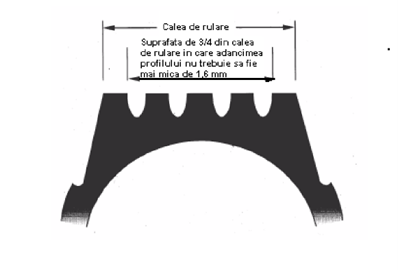
The tyre's tread pattern consists of the grooves and ridges on the tread. The tread depth must not be less than 1.6 mm, measured across the central three-quarters of the tread width. For safety, a deeper tread is recommended, especially on wet roads or in winter conditions;

Tyre structure:

  • Carcass: is the tyre's load-bearing structure, forming its framework. It withstands the high and complex loads to which the tyre is subjected while driving;
  • tread: provides grip and contributes to braking effectiveness. As it wears, the tyre's ability to provide traction decreases;
  • breaker layer: is positioned between the carcass and the tread. It connects these two parts and helps absorb shocks caused by uneven road surfaces;
  • sidewall: protects the tyre against external mechanical stresses;
  • bead: is the inner part of the tyre that contacts the rim and ensures that the tyre is properly seated on the wheel;
  • bead core: provides the bead with rigidity and strength and consists of steel wire strands encased in rubber;
  • inner tube: is a ring-shaped component made of natural or synthetic rubber, fitted with a valve through which pressurised air is introduced.

RIM: In terms of profile and configuration, the rim is selected according to the motor vehicle category and the loads acting on the wheel. Drop-centre rims are used on cars and lorries. These may have open or closed flanges formed from the rim shoulder, with higher flanges contributing to the tyre's lateral stability;

WHEEL DISC: is the component that connects the hub to the rim. It is attached to the rim by welding or riveting and secured to the hub using bolts or studs. The disc usually has openings to reduce weight and allow ventilation.

REMEMBER!

The markings on the sidewalls, such as 215/45 R16 84V, have the following meanings:

  • 215 indicates the tyre width in millimetres;
  • 45 indicates the ratio of the sidewall height to the tyre width;
  • R indicates radial construction;
  • 16 indicates the tyre's internal diameter in inches;
  • 84 indicates the load index, corresponding to a maximum permissible load of approximately 500 kg per tyre;
  • V indicates the speed rating.

Comments Leave a comment

Leave a comment

To be able to leave a comment, you must be logged in and have activated the PREMIUM plan! Go to the login or account register page

© Copyright Școala Rutieră 2026. All rights reserved.