





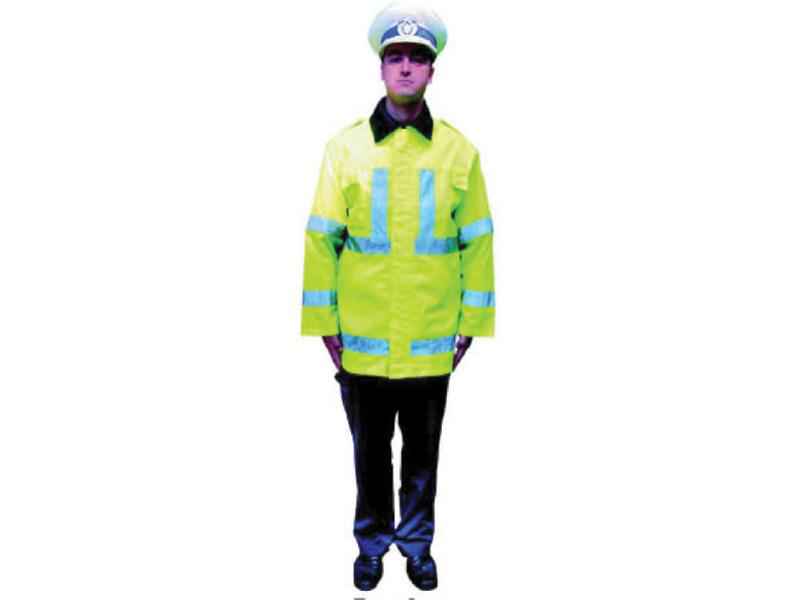
If the traffic police officer is facing you and has the arms extended horizontally, it signifies stop for the participants in traffic who come from the front and from the back of the traffic police officer. After giving this signal, the traffic police officer may lower the arms, the position meaning also "stop" for the participants in traffic who come from the front and from the back of the traffic police officer.
Another example is this one, when the traffic police officer is facing you and has only the left arm extended horizontally, this signal signifies stop for the participants in traffic who come from the front of the traffic police officer. After giving this signal, the traffic police officer may lower the arm, the position meaning also "stop" for the participants in traffic who come from the front of the traffic police officer.
Therefore, the position of the traffic police officer with the hands alongside the body is a continuation of the stop signal performed with the arm or the arms extended horizontally and continues to signify stop for the participants in traffic to whom the previous signal referred.
The correct answer is: B
Regulation** - Article 88
(1) The signals of the police officer who directs the traffic have the following meanings:
[...]
b) the arm or the arms extended horizontally signify "stop" for all the participants in traffic who, regardless of their direction of travel, move from the direction or directions intersected by the arm or the arms extended. After giving this signal, the police officer may lower the arm or the arms, the position meaning also "stop" for the participants in traffic who come from the front or from the back;
[...]
** Regulation = REGULATION for the implementation of OUG 195/2002 updated (Road Traffic Code Regulation)

Leave a comment